
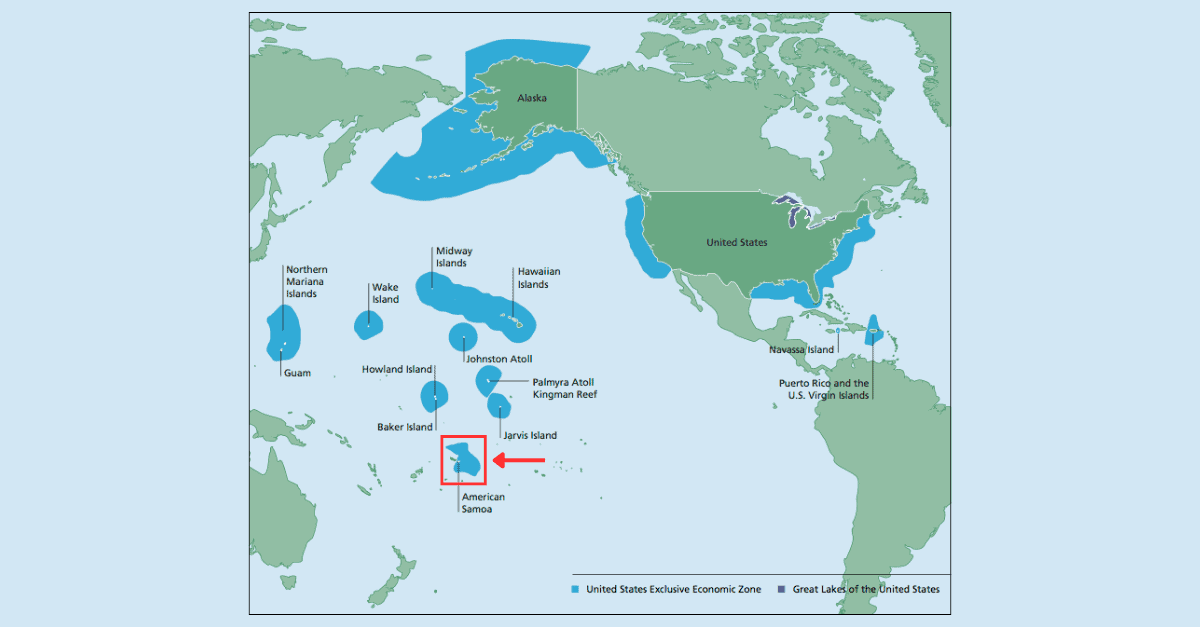
American Samoa is emerging as a new potential frontier for deep-sea mining, joining global players like Japan, India, and Norway in the race to commence seafloor mineral extraction.
In April, the pioneering US-based deep-sea mining company Impossible Metals, requested the U.S. Bureau of Ocean Energy Management (BOEM) to launch a commercial auction for mineral leases in the marine areas surrounding American Samoa.
The request aligns with an executive order (EO) signed on April 24, 2025, which directs federal agencies to streamline permits for seabed mineral exploration under the Outer Continental Shelf Lands Act (OCSLA). The EO aims to secure critical minerals like nickel, cobalt, and manganese, reducing U.S. reliance on foreign suppliers like China.
Following the EO and Impossible Metals’ request, the US Bureau of Ocean Energy Management (BOEM) has initiated the process to hold a mineral lease sale. It will follow the conventions of previous OCSLA lease sales, such as offshore oil and wind projects. Impossible Metals is the first company to request such a lease of critical minerals.
Information on mineral resources offshore American Samoa is sparse. Still, mapping goes back to the 1970s, and according to USGS, the waters contain several types of mineral deposits, including sulfides, crusts, phosphorite deposits and nodules.
Impossible Metals states that the area identified for exploration is believed to contain critical minerals, including nickel, cobalt, copper, manganese, and rare earth elements.
The nodules are found in the Samoa Basin east of the islands at depths of 5,000 – 6,000 meters. Some reports (USGS and SPC-EU Deep Sea Minerals Project) have suggested that the nodule prospectivity is poor in certain parts of the American Samoa EEZ where sedimentation is high, underlining the need for more mapping and exploration activities to determine tonnage and grades.
Innovative technology
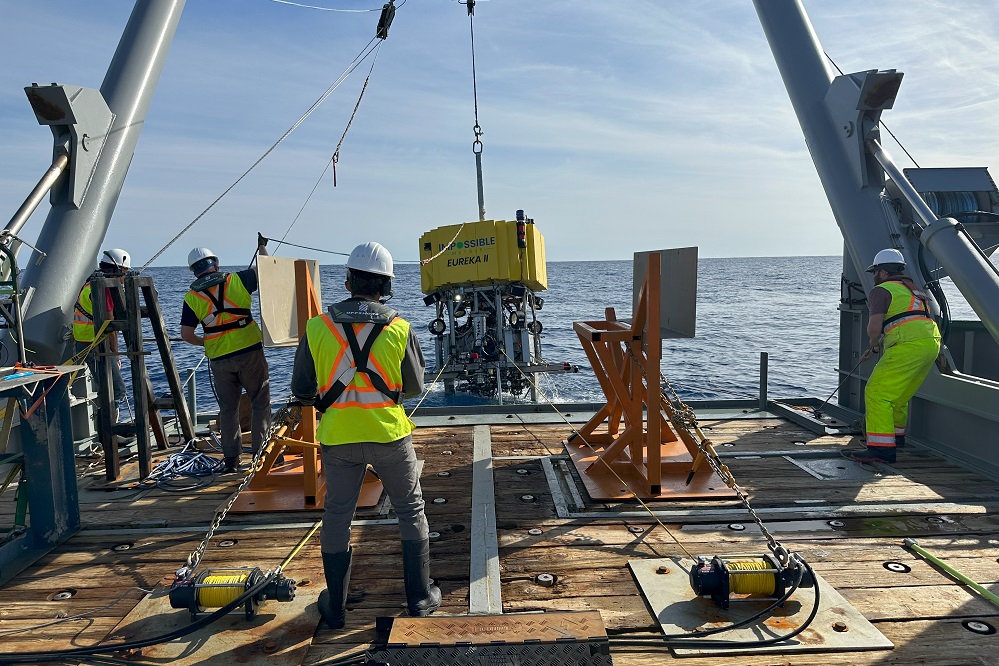
The company has spent years developing their autonomous underwater vehicle (AUV) – Eureka – to mine nodules efficiently and with minimal environmental disturbance.
– Impossible Metals’ innovative approach to selective harvesting of minerals from the deep sea will revolutionize the mining industry and ensure that the United States remains a leader in sustainability, technology, and clean energy, said Oliver Gunasekara, CEO and Co-Founder of Impossible Metals.
What sets Impossible Metals’ technology apart from competitors, is first and foremost that the AUVs are designed to float above the seafloor. Instead of indiscriminate vacuuming, a set of mechanical arms will pick up the individual nodules. In combination, these features will minimize plume generation and disturbance of benthic organisms.
Furthermore, the Eureka nodule pickers will have an AI-driven computer vision system that recognizes collectible nodules and avoids other types of rocks or nodules with marine life.
The company believe using a fleet of Eurekas for mining and transporting nodules to a ship on the surface reduces noise and costs compared to riser pumps.
Impossible Metals demonstrated the Eureka 2 model late in 2024 and is currently developing Eureka 3. The upcoming model, expected to be the size of a minibus, is envisioned to be the final prototype model that will pave the way for commercial use of the AUVs in a fleet.
A test of Eureka 3 in the CCZ is expected in 2027 or 2028. If the lease is approved, Eureka 3 could be deployed in American Samoa following these tests.
A less controversial move
While the American Samoa lease sale is within U.S. jurisdiction, the EO’s push for mining in international waters under the 1980 Deep Seabed Hard Mineral Resources Act (DSHMRA) has sparked debate.
Under the United Nations Convention on the Law of the Sea (UNCLOS), the International Seabed Authority (ISA) governs the «Area»—the seabed beyond national jurisdiction. Most nations recognize its authority, but the U.S., a non-signatory, doesn’t. This creates a legal gray area that challenges the international framework and ISA’s role as perceived sole regulator of the Area.
The Metals Company (TMC), a Canada-based firm, recently applied for a Clarion-Clipperton Zone (CCZ) nodule mining permit under the DSHMRA, frustrated by delays in the ISA’s mining code.
TMC’s move, and the EO, has drawn scrutiny by the international community, citing the UN-mandated licensing system’s focus on common heritage of humankind and level playing fields for contractors.
geo365.no: The future of deep-sea mining
geo365.no: TMC’s bold move