
When OKEA took over operatorship of Draugen in 2018 and Brage in 2022, both fields were already well into the mature phase of their life cycle. Since then, the company has focused on finding new value in mature fields and existing infrastructure.
At the Dig X Subsurface 2026 conference in Lillestrøm, Arne K. Kvalheim, Lead Geo/Data Scientist at Earth Science Analytics, and Frank Hauge, Principal Geophysicist at OKEA, will present how machine learning and deep learning can support that effort.
The challenge is familiar across many mature fields. Even after decades of production and large numbers of wells, significant uncertainty may remain between well locations. Faults and geological variability can make it difficult to determine where the remaining resources are located.
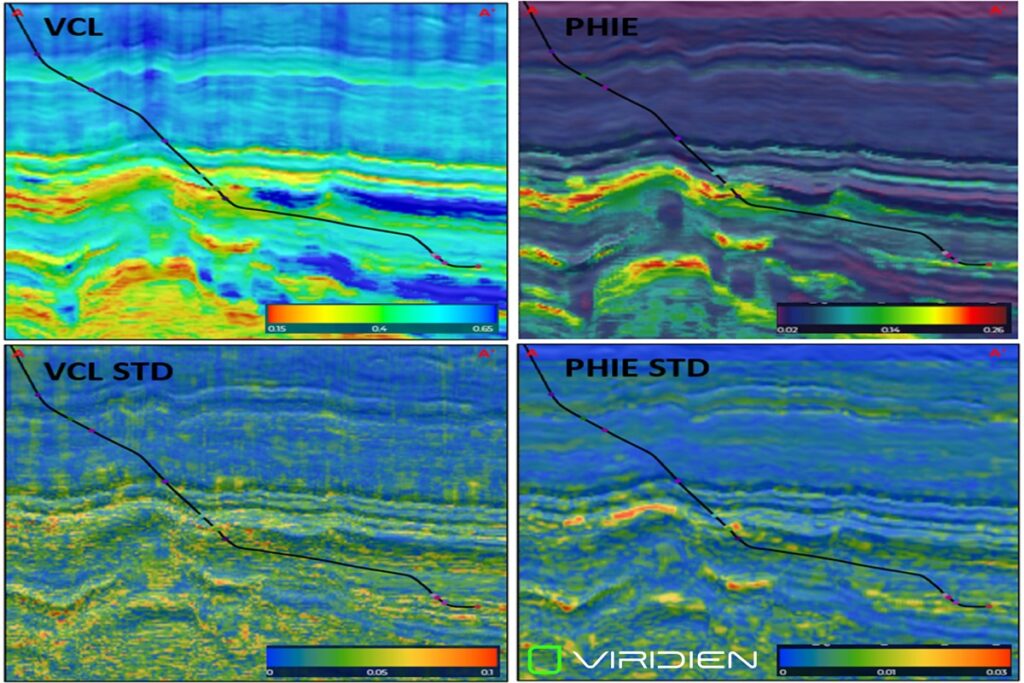
The study uses data from around 100 exploration and development wells associated with a mature North Sea oil field. After extensive quality control and preparation of the data, deep-learning models were trained using well logs, seismic data and velocity information to predict reservoir properties between the wells.
The result is a set of three-dimensional models showing how properties such as porosity, shale content and water saturation vary across the reservoir. In addition, the workflow highlights areas where the models disagree most, helping geoscientists identify uncertainty and potential knowledge gaps.
According to the authors, the goal is not to replace existing workflows, but to provide an additional perspective that can test geological interpretations and reveal new opportunities.
The approach helps geoscientists fill in some of the gaps between wells, where direct measurements are unavailable. This can improve understanding of reservoir continuity, highlight areas of higher uncertainty and support future well planning.
For a company like OKEA, which specializes in creating value from mature fields, a better understanding of the reservoir can be an important tool in the search for additional recoverable volumes.
Join us in Lillestrøm on December 2–3 to learn how AI and deep learning are being applied to mature-field development and reservoir management. The program can be found on the conference website.