Close Menu
    Facebook LinkedIn
    Geo365
    Facebook LinkedIn
    BESTILL Login ABONNÉR PÅ NYHETSBREV
    • Hjem
    • Anlegg og infrastruktur
    • Aktuelt
    • Bergindustri
    • Dyphavsmineraler
    • Miljø
    • Olje og gass
    • Geofunn
    • Download Media Guide
    Geo365
    You are at:Home » Seabed mining – life recovers
    Dyphavsmineraler

    Seabed mining – life recovers

    At Seabed Minerals 2026, Hannah Grant (BGS) will present findings from the SMARTEX project, showing how experimental manganese nodule mining in the Clarion-Clipperton Zone continues to affect sediments — yet many biological communities are re-emerging.
    By Redaksjonenmars 17, 2026
    Del denne artikkelen Facebook Twitter LinkedIn Email

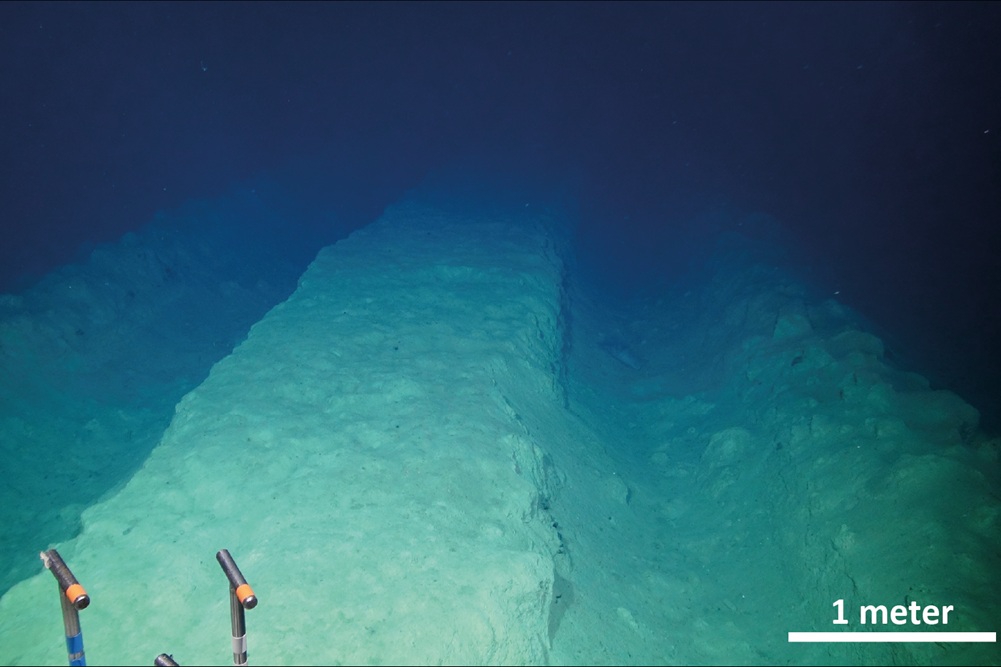
    ROV image of the 1979 OMCO test mining track, showing long-term seafloor disturbance and removal of nodules (Credit: Jones et al., 2025).

    Facebook Twitter LinkedIn Email

    Polymetallic nodules in the deep ocean have the potential to supply critical metals for emerging sustainable technologies, as terrestrial mines face declining ore grades and a shortage of new large deposits. Robust environmental impact assessments are crucial before mining can take place.

    The SMARTEX project, led by the UK Natural Environment Research Council, investigates the long-term impacts of experimental mining in the Clarion-Clipperton Zone (CCZ).

    Nearly 45 years after a 1979 Ocean Mining Company (OMCO) trial, surveys show that while physical impacts to the seafloor persist, including removal of the top 10–15 cm of sediment and shifts in Fe, Mn, Ni, and Mo profiles, many biological communities are re-colonizing. Some assemblages already show abundances comparable to undisturbed areas.

    The CCZ, located in international waters between Mexico and Hawaii, is considered the world’s largest known nodule field. It is managed by the International Seabed Authority (ISA), and a handful of sponsoring states are conducting exploration activities while awaiting regulatory frameworks that could allow future mining.

    Geochemical analyses show that porewater chemistry has largely returned to baseline, indicating substantial equilibration over decades. Numerical modelling of sediment consolidation suggests that excess pore pressure from the collector dissipated quickly, with hydrostatic pressure minimizing the release of buried metals.

    The study is one of the few long-term investigations of deep-sea mining impacts, providing a rare glimpse of how abyssal ecosystems respond over decades. While physical disturbances are likely to persist for many decades, the observed re-colonization and resilience of biological communities highlight opportunities to design mining strategies that reduce ecological impact.

    Hannah Grant, Senior Minerals Geoscientist at the British Geological Survey (BGS), will explore sediment dynamics, geochemistry, and the surprising resilience of abyssal ecosystems, providing crucial insights for responsible management of future deep-sea mining operations.

    Join us at Seabed Minerals 2026, Bergen, Norway, March 24–26, 2026, to learn more!

    Read the study in Nature: Long-term impact and biological recovery in a deep-sea mining track

    Related Posts

    Knytter mineralfunn til Framstredets åpning

    juni 2, 2026

    Demonstrerte mulighetene – satt på pause

    mars 25, 2026

    The dark oxygen controversy

    mars 24, 2026
    Add A Comment

    Comments are closed.

    NYHETSBREV
    Abonner på vårt nyhetsbrev
    geo365.no: ledende leverandør av nyheter og kunnskap som vedrører geofaget og geofaglige problemstillinger relatert til norsk samfunnsliv og næringsliv.
    KONFERANSER

    En sårbar situasjon for Longyearbyens drikkevann
    Jun 04, 2026

    En sårbar situasjon for Longyearbyens drikkevann

    NGU i toppsjiktet
    Jun 01, 2026

    NGU i toppsjiktet

    Ser litiumpotensial på norsk sokkel
    May 28, 2026

    Ser litiumpotensial på norsk sokkel

    En egenrådig gründer
    May 25, 2026

    En egenrådig gründer

    Meteorittkrater: Torstrukturen
    May 22, 2026

    Meteorittkrater: Torstrukturen

    AI-driven integration for deeper subsurface insights
    Jun 05, 2026

    AI-driven integration for deeper subsurface insights

    The Supermajors are scaling up, are you?
    Jun 04, 2026

    The Supermajors are scaling up, are you?

    Mexico – what’s happening
    Jun 04, 2026

    Mexico – what’s happening

    Cape Station and the case of the missing reserves report
    Jun 03, 2026

    Cape Station and the case of the missing reserves report

    From image to insight: Why seismic data quality matters for CO₂ storage
    Jun 03, 2026

    From image to insight: Why seismic data quality matters for CO₂ storage

    OLJEPRIS
    BCOUSD quotes by TradingView
    GULLPRIS
    GOLD quotes by TradingView
    KOBBERPRIS
    Track all markets on TradingView
    GeoPublishing AS

    GeoPublishing AS
    Trollkleiva 23
    N-1389 Heggedal

    Publisher & General Manager

    Ingvild Ryggen Carstens
    ingvild@geopublishing.no
    cell: +47 974 69 090

    Editor in Chief

    Ronny Setså
    ronny@geopublishing.no
    +47 901 08 659

    Media Guide

    Download Media Guide

    ABONNEMENT
    NYHETSBREV
    Abonner på vårt nyhetsbrev
    © 2026 GeoPublishing AS - All rights reserved.

    Type above and press Enter to search. Press Esc to cancel.