Close Menu
    Facebook LinkedIn
    Geo365
    Facebook LinkedIn
    BESTILL Login ABONNÉR PÅ NYHETSBREV
    • Hjem
    • Anlegg og infrastruktur
    • Aktuelt
    • Bergindustri
    • Dyphavsmineraler
    • Miljø
    • Olje og gass
    • Geofunn
    • Download Media Guide
    Geo365
    You are at:Home » Processing is key
    Dyphavsmineraler

    Processing is key

    Ensuring efficient extraction of valuable metals from seabed ore is crucial for the new industry's viability.
    By Ronny Setsåmars 26, 2025
    Del denne artikkelen Facebook Twitter LinkedIn Email

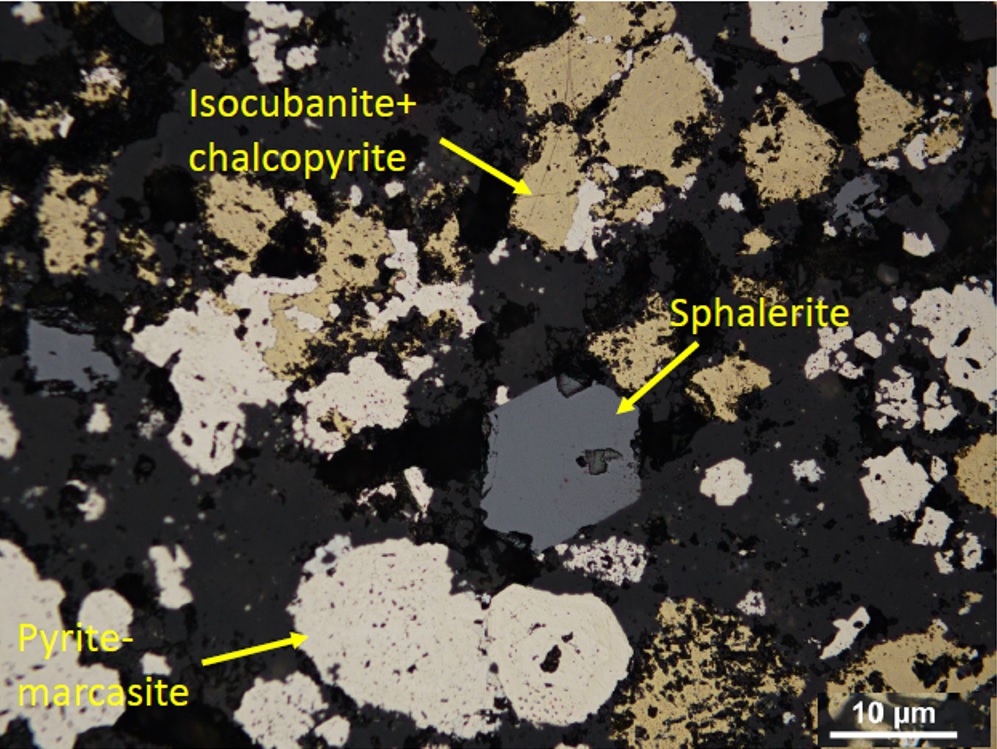
    Photomicrograph of a sample collected at the Norwegian Arctic Mid-Ocean Ridge, demonstrating seafloor massive sulfides mineralogy and texture. Source: Abstract by Kowalczuk et al., 2025

    Facebook Twitter LinkedIn Email

    Seabed minerals, be it manganese nodules from the Pacific Ocean, polymetallic crusts from the Arctic spreading ridge, or seafloor massive sulfides from the Indian Ocean, are expected to contain vast amounts of a variety of metals that are essential for the energy transition and for strengthening our mineral value chains.

    However, from a mineralogical perspective, these ores may significantly differ from the traditional ores currently extracted on land. Will we be able to extract these metals at processing facilities, and what technologies and methods will be required?

    For the deep-sea mining industry to become profitable, processing technologies must be efficient and cost-competitive with land-based mining and recycling methods. In other words, processing will be key to developing a successful industry focused on marine minerals.

    At the Deep Sea Minerals 2025 conference in Bergen in April, we are dedicating a session to dive into this topic.

    Nina Solvang, project director in Future Materials, will present the results from a study done on sulfide ore collected from the Norwegian Arctic Mid-Ocean Ridge by the EMINENT project in 2023.

    The findings revealed that the ore possesses complex mineralogy, characterized by fine, interlocked mineral grains. The substantial variation in processing responses emphasized the importance of accurately classifying deposits based on their processability.

    Solvang will demonstrate that effective recoveries can still be achieved through customized processing techniques, which differ from the methods typically used for copper and zinc-rich ores on land.
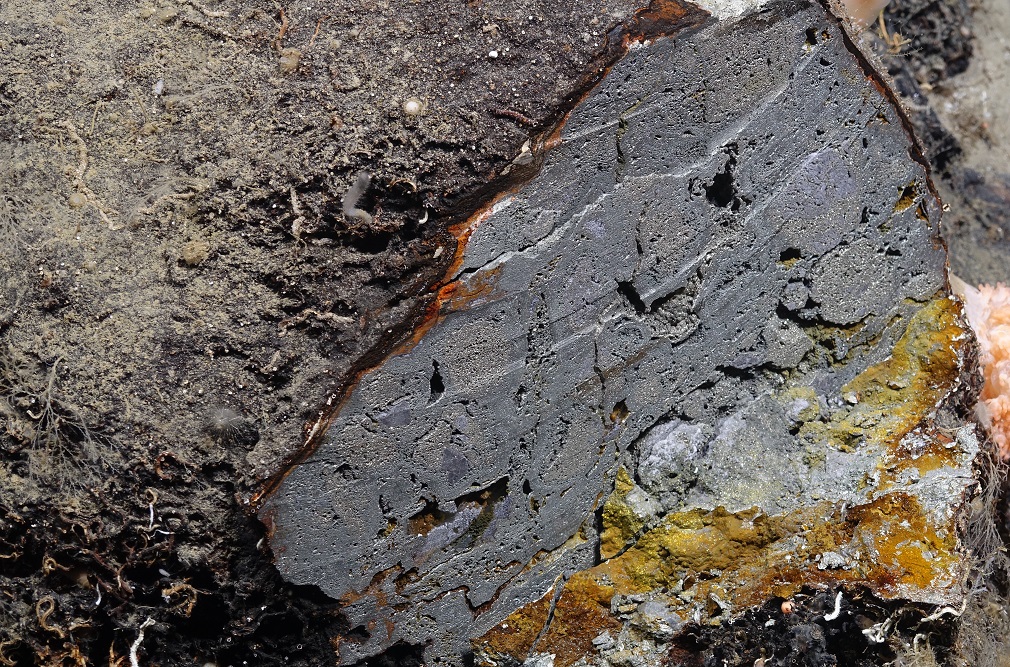
    Seabed mineral ores are mineralogically different from land-based ores and may require different approaches to processing. Shown here is a photo from the Deep Insight Hill SMS discovery on the Mohn’s Ridge. Photo: Ægir 6000/University of Bergen

    Niels Verbaan, director of technical services at SGS Canada, will give us an overview of processing routes under consideration and share results from an internal study on the processing of seabed nodules.

    SGS tested high-pressure acid leaching (HPAL) as a processing method, and the results demonstrated excellent recovery rates for nickel, cobalt, and copper. While most manganese, iron, and aluminum remained in the leach residue, these metals can potentially be extracted by further processing using a reductive leach or by pyrometallurgical means.

    Verbaan will also provide initial considerations for processing crusts. Crusts contain a variety of metals, including cobalt, vanadium, rare earth elements, and scandium, suggesting several different processing techniques may be required.

    As seabed minerals present a new source of materials for the processing industry, comprehensive material characterization and testing are essential to ensure efficient processing.

    Deep Sea Minerals 2025 will take place in Bergen from 1-3 April. The program and registration page can be found on the conference website.

    Related Posts

    Movement towards a mining moratorium

    august 4, 2026

    Mounds, layers and sands of ore

    juli 28, 2026

    Ny vurdering av det ukjente

    juni 7, 2026
    Add A Comment

    Comments are closed.

    NYHETSBREV
    Abonner på vårt nyhetsbrev
    geo365.no: ledende leverandør av nyheter og kunnskap som vedrører geofaget og geofaglige problemstillinger relatert til norsk samfunnsliv og næringsliv.
    KONFERANSER

    Vil norsk industri omfavne CCS?
    Aug 04, 2026

    Vil norsk industri omfavne CCS?

    En utenomjordisk bouquet
    Jul 31, 2026

    En utenomjordisk bouquet

    Raet – et tidsvitne
    Jul 29, 2026

    Raet – et tidsvitne

    Kosmisk stråling: Siggjo, Sunnhordland
    Jul 23, 2026

    Kosmisk stråling: Siggjo, Sunnhordland

    Tidlig oljeutdrivning betyr ikke prospektivitet
    Jul 21, 2026

    Tidlig oljeutdrivning betyr ikke prospektivitet

    Benin’s second act: Redevelopment of the historic Sèmè Field
    Aug 06, 2026

    Benin’s second act: Redevelopment of the historic Sèmè Field

    Mic drop: Dropstones are, in fact, polymetallic nodules
    Aug 06, 2026

    Mic drop: Dropstones are, in fact, polymetallic nodules

    Many CCS projects may falter quietly without the promised benefits
    Aug 05, 2026

    Many CCS projects may falter quietly without the promised benefits

    Deepwater’s playbook for delivering growth
    Aug 04, 2026

    Deepwater’s playbook for delivering growth

    Response to feedback from Mark McClure
    Aug 03, 2026

    Response to feedback from Mark McClure

    OLJEPRIS
    BCOUSD quotes by TradingView
    GULLPRIS
    GOLD quotes by TradingView
    KOBBERPRIS
    Track all markets on TradingView
    GeoPublishing AS

    GeoPublishing AS
    Trollkleiva 23
    N-1389 Heggedal

    Publisher & General Manager

    Ingvild Ryggen Carstens
    ingvild@geopublishing.no
    cell: +47 974 69 090

    Editor in Chief

    Ronny Setså
    ronny@geopublishing.no
    +47 901 08 659

    Media Guide

    Download Media Guide

    ABONNEMENT
    NYHETSBREV
    Abonner på vårt nyhetsbrev
    © 2026 GeoPublishing AS - All rights reserved.

    Type above and press Enter to search. Press Esc to cancel.